
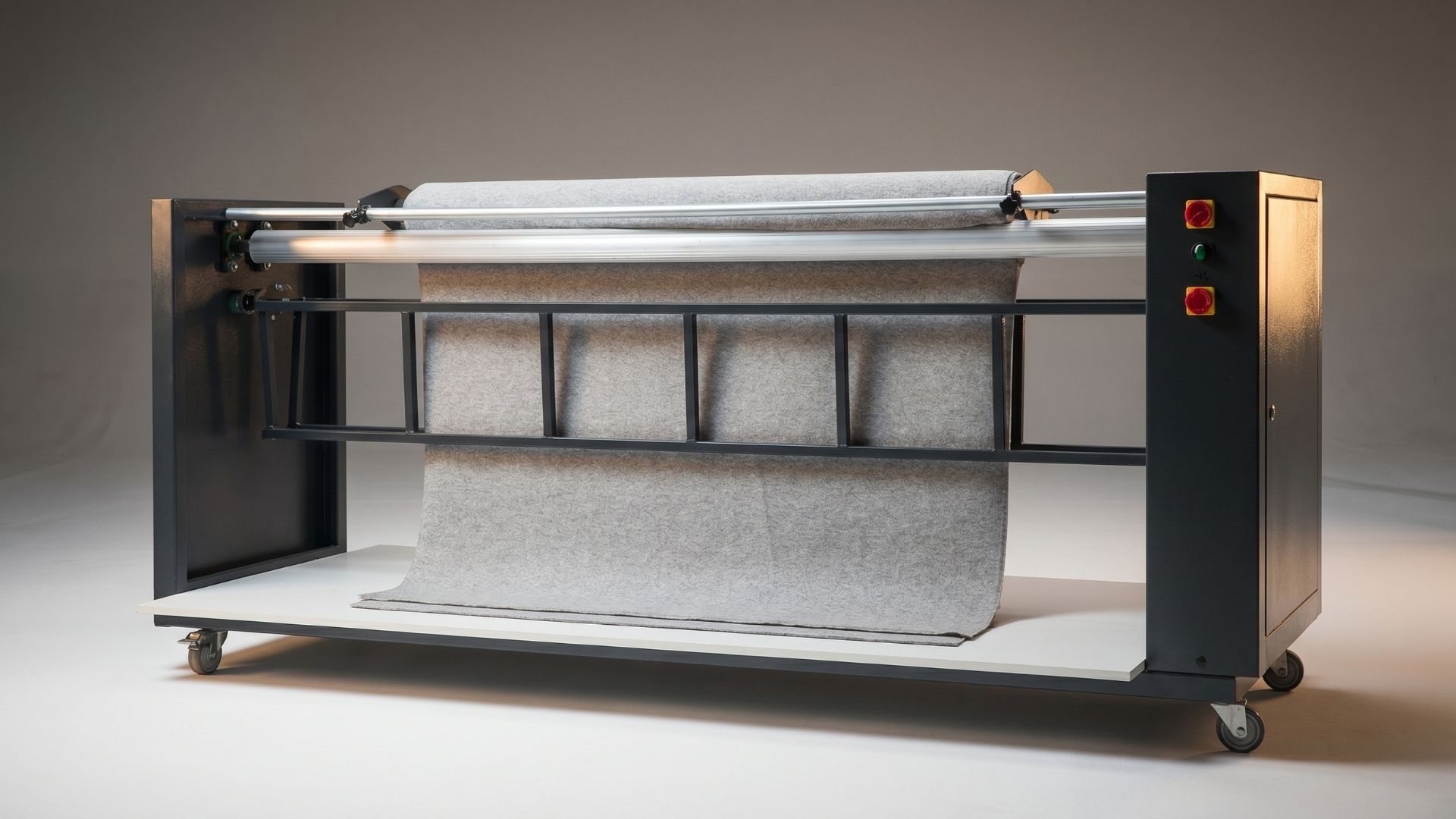
Part 1: Fabric Spreading Solutions
Maintaining competitiveness in the global textile market depends on managing production processes flawlessly and with optimized costs. In a textile factory, efficiency begins the moment the fabric leaves the warehouse and reaches the cutting table. At this critical juncture, the fabric spreading machine plays a vital role as the fundamental element determining the quality standard for the rest of the production line. As Alser Technology, we provide high-tech solutions to textile manufacturers across Turkey with our new-generation spreading systems developed at our modern production facility in Akyazı, Sakarya.
What is a Fabric Spreading Machine?
A fabric spreading machine is an automated system that ensures fabrics—whether in rolls or relaxed form—are spread onto the cutting table according to the predetermined marker length. These machines are not merely transport vehicles; they are automation solutions that neutralize static electricity on the fabric, balance tension, and perform millimetric edge alignment. A modern spreading unit consists of a spreading head, drive motors, a PLC control panel, and a fabric feeding system.
What is the Function of a Fabric Spreading Machine?
The fabric spreading machine manages the fundamental preparation stage of the textile production line. Its functions can be summarized under the following technical headings:
-
Accurate Marker Preparation: The success of the automatic cutting (Cutter) stage depends on the fabric being spread smoothly on the table. The spreading machine minimizes cutting errors by preventing shifts between layers.
-
Precision Tension Management: Lycra and elastic fabrics, in particular, can stretch during manual spreading. Automatic systems spread the fabric with "zero tension," preventing shrinkage issues that may occur after cutting.
-
Reduction of Waste Rates: Electronic edge control and programmable marker lengths reduce fabric waste to a minimum.
-
Acceleration of Operational Processes: It eliminates time losses in production by completing spreading operations, which take a long time with manual methods, in much shorter durations.
-
Occupational Safety: It creates a safer working environment by reducing the need for heavy fabric rolls to be carried by physical force.
Alser Spreading Systems: Technical Features
-
High-Speed Spreading (APS 1 PS Series): Adapts to intensive work schedules with speeds up to 105 m/min and flexible working widths (160 cm - 220 cm).
-
Advanced Material Control: Features smart tension control via sensors and conveyor-belted servo motors to prevent material deformation.
-
Digital Integration: Fully compatible with industry-standard CAD software (iBrightcut, iPlycut, Smartcut) and supports DXF, PDF, and HPGL formats.
Part 2: Professional Solutions in Fabric Cutting
The fundamental elements determining competitiveness in the global textile market are speed, low operational costs, and high precision. Technologies used in the cutting stage—the starting point of the production line—directly impact the final product's quality and the enterprise's long-term profitability. Today, automatic fabric cutting machines (Cutters), replacing manual methods, raise production standards by minimizing error margins. The ALC9 and ALCUT 7 series, developed at our production facility in Akyazı, Sakarya, are professional solutions that optimize these advantages with their technical specifications.
Key Advantages of Industrial Cutting Systems
A modern fabric cutting machine is not just a cutting tool; it is an automation hub that transforms digital data from the design office into a physical product.
1. High Cutting Capacity and Ply Efficiency
Industrial cutting machines compress fabric layers into a single block using powerful vacuum technology. This allows the blade to move through layers without deviation.
-
ALCUT 9 Model: Offers an extraordinary under-vacuum cutting capacity of 9 cm, allowing for more pieces in a single operation.
-
ALCUT 7 Model: Exhibits high performance in flexible production lines with a 7 cm capacity.
2. Millimetric Accuracy with Precision XY Transmission
The precision XY transmission (gear and rack) system used in the ALCUT series operates without mechanical deviation.
-
Accuracy: Eliminates size differences between the top and bottom layers of the spread.
-
Stability: The robust chassis and precise gear system prevent vibration even at high speeds.
3. Smart Automation Features and Operational Continuity
-
Automatic Blade Sharpening: Ensures the blade remains at ideal sharpness during operation.
-
Blade Cooling Unit: Prevents technical textile materials from sticking to the blade by controlling friction-induced heat.
4. Digital Flexibility and Universal Software Compatibility
Alser systems are 98% compatible with fabric CAD software (DXF, PDF, PLT, CUT, TAC, and HPGL formats), allowing for last-minute edits and production flexibility.
Part 3: Professional Solutions in Design and Pattern Plotting
The CDY 1 Drawing Plotter optimizes the transition from design to production with high speed and precision.
What is a Plotter and Its Importance in Production?
A plotter is a high-precision printer that transfers digital patterns and marker plans prepared in CAD software onto specialized paper. Accurate plotting is essential for preventing fabric waste and ensuring piece compatibility during sewing.
High-Speed and Quiet Performance with the CDY 1 Plotter
-
Capacity and Speed: Reaches speeds of up to 100 m²/hour with a wide plotting area (200 cm - 220 cm).
-
Dual-Cartridge System: Powered by two H-P 45 cartridges, it can continue plotting with a single cartridge if one runs out, ensuring continuity.
-
Smart Integration: Supports network connection for multi-user access and features a digital control panel for easy command management.
-
User Experience: Low noise levels and an automatic paper-cutting system optimize the office environment for design teams.
Part 4: Professional Solutions in Fabric Opening and Relaxing
The most critical and often overlooked stage of textile production is the process of taking the fabric out of its roll and preparing it for cutting. A fabric roll reaches the facility with high tension resulting from production and winding processes. Cutting performed without releasing this tension leads to serious dimensional deviations and "shrinkage" problems after the product is sewn. Alser Technology solves these issues at their root with the AKA1 Roll Fabric Opening Machine, developed at our modern facility in Akyazı, Sakarya.
What is a Fabric Opening Machine?
A fabric opening machine is an industrial automation device that ensures the controlled opening of textile materials in rolls, the discharge of static tension, and the neat folding of the fabric for spreading or subsequent processes. Also known in the industry as a "fabric relaxing machine," these systems guarantee standardization in textile production by allowing the fabric to return to its natural form.
Functions of the Fabric Opening Machine
The primary function of the machine is to relieve the fabric of its physical stress. When an untreated fabric roll is laid on the cutting table, the fibers are under tension. Once cut, the released fibers contract, causing the pieces to be smaller than the designed pattern. Professional solutions like the AKA1 perform the following functions:
-
Relaxing (Tension Relief): Opens the fabric with the help of discharging rollers to allow the fibers to loosen.
-
Marker Preparation: Stacks the fabric in neat layers, accelerating the transition to the spreading table.
-
Quality Control Opportunity: Allows the operator to detect weaving defects, holes, or stains at an early stage during the opening process.
-
Speed and Efficiency: Eliminates the time loss and fabric deformation experienced in manual opening processes.
Alser AKA1: Automatic Fabric Relaxing Solutions
-
Wide Working Width and Flexibility: With a working width of up to 220 cm, the AKA1 adapts to all standard roll sizes in the textile sector, from home textiles to apparel.
-
Precision Electronic Speed Control: Features speed control that can be precisely adjusted between 0-50 meters per minute. The ergonomic control panel allows for full mastery over forward, reverse, and speed settings.
-
Smart Spreading (Swinging) Unit: The most important mechanical feature is the swinging unit at the bottom. Fabric coming from the discharging rollers is dropped without tension, creating a clear stack between 60 cm and 70 cm.
Technical Structure and Durability Standards
-
Aluminum Roller Technology: 80 mm diameter custom-produced aluminum rollers provide lightness and minimize friction that could damage the fabric.
-
Electrostatic Powder Coating: The machine body is coated with electrostatic powder paint resistant to industrial wear and external factors.
-
Modular Mechanical Design: The design allows easy access to every point for maintenance, minimizing downtime.
Benefits to Your Enterprise
-
Zero-Error Measurement: Since the fabric is relaxed, post-cutting shrinkage risks are minimized, preventing customer returns.
-
Low Labor Cost: A single operator can complete the work of two people in a much shorter time.
-
Maximum Material Savings: Proper stacking reduces edge losses and waste during spreading.
-
High Production Capacity: Increases the feeding speed of the cutting table, enhancing the efficiency of the entire production line.
For technical information and solutions to optimize your production line, please contact our expert team.